Meet the home server that finally organized 20 years of scattered files, photos, and music, running quieter than a light bulb.
Somewhere in your house, there's probably an old laptop or desktop gathering dust. Mine used to be one too, until I turned it into something I now use every single day.
I call it friday. Yes, like Tony Stark's AI in Iron Man. But let's be clear before you get excited: this isn't a sentient AI. There's no magic, no "thinking machine." It's just one always-on computer that knows where everything is and answers instantly when I ask. That's the whole idea, and honestly, that's all I ever needed.
Here's exactly what it runs on, what it does, and why an old, forgotten machine turned out to be more than enough.
The Hardware: Nothing Fancy
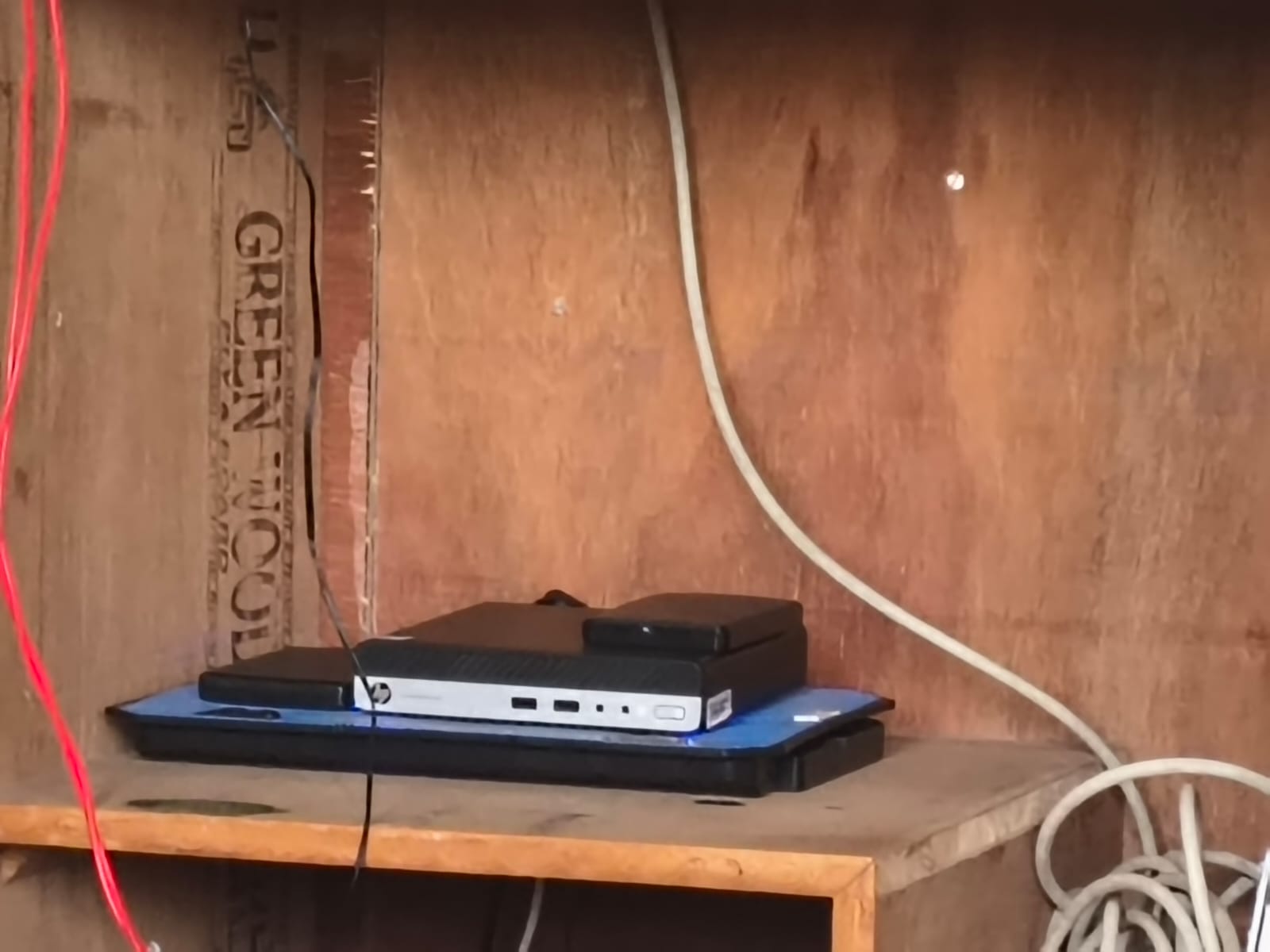
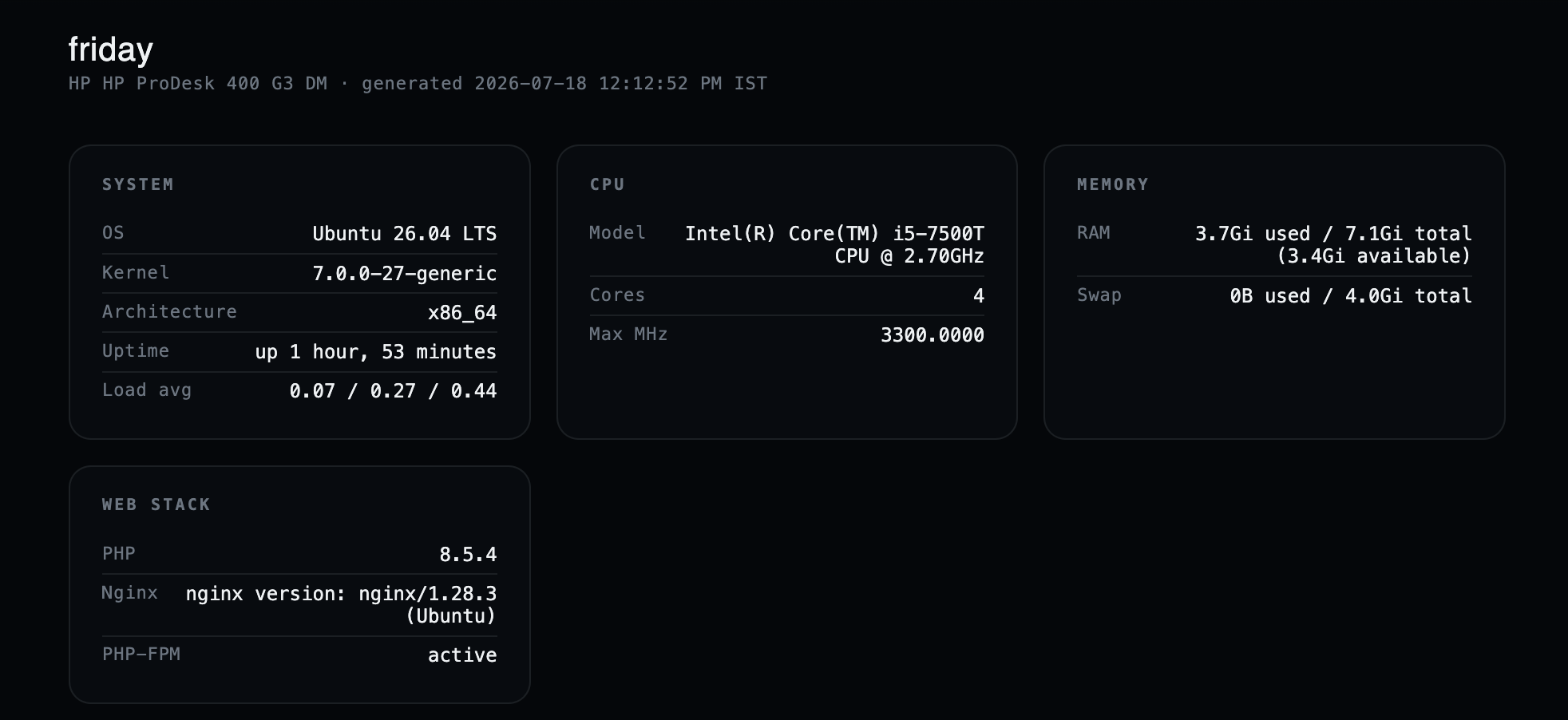
This is the part that surprises people the most. Friday isn't some expensive rack of servers. It's an HP ProDesk Tiny, a G3 or a G5, I honestly still can't tell which (a compact mini PC, about the size of a paperback book) with:
- No GPU
- 4 CPU cores
- 8GB of RAM
- Ubuntu Server, a free, lightweight operating system
That's the entire computer. And it runs everything below on just 15 to 25 watts of power, less than a single light bulb, cheap enough to leave on 24/7 without worrying about the electricity bill.
For storage, I simply reused drives I already owned: one small internal drive for the operating system and apps, a 1TB drive for permanent backups, and a couple of old external drives holding years of exports, phone backups, and family photos. Nothing here needed to be bought new. It was all sitting around, unused.
A Tiny AI That Costs Almost Nothing to Run
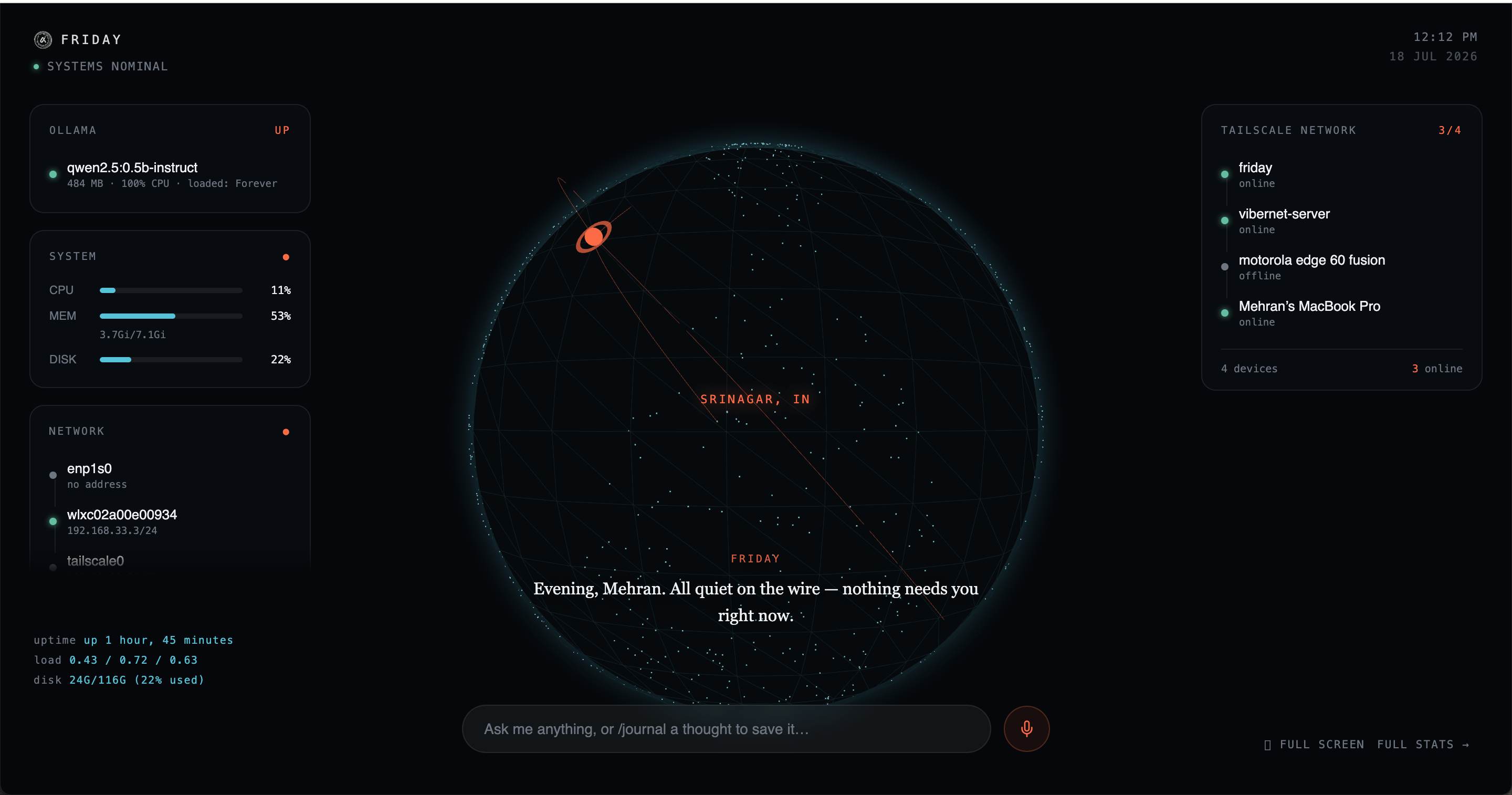
The one genuinely "AI" part of this setup is a small language model running locally through a free tool called Ollama. It's called Qwen2.5-0.5B, a tiny model, under 400MB, that comfortably fits in memory without slowing anything else down.
I keep it "warm" so it never has to cold start, which makes replies feel instant. It powers a simple chat box on friday's dashboard where I can type a quick note and have it saved privately, ask for a daily summary pulled from a ready-made digest, or just chat with it directly for small questions.
It's not a genius, and I don't expect it to be. Early on, I tried feeding it a whole day's worth of notes and asking it to summarize everything, and it struggled every time. The fix wasn't a bigger, fancier model. It was doing the heavy lifting myself in a simple script first, figuring out what actually changed, and only asking the tiny AI to turn that into a friendly sentence. Small models are great at rephrasing something short and clear, not at untangling something long and messy. Once I stopped fighting that limitation and started designing around it, everything just worked.
It also never touches anything sensitive. It only ever sees my personal notes, never private documents or anything that actually matters if leaked.
Replacing Paid Subscriptions With Free, Self-Hosted Tools
A handful of small apps run on friday, each replacing something I used to pay a subscription for:
- Uptime Kuma quietly watches everything else and alerts me the moment something goes down
- Navidrome holds my entire personal music library and streams it to my phone like a private Spotify
- Immich backs up and organizes every photo and video I own, sorted and categorized automatically, like a private Google Photos
- A private git server for storing my own code, instead of paying for private repositories elsewhere
Each app runs in its own isolated container, so even if I mess something up, nothing can accidentally leak into something else.
Get new posts by email, daily-ish writing on ISP economics, AI in production, and building in Kashmir.
The Real Reason I Built This: My Second Brain
Here's the part that actually changed how I live.
I had 20 years of digital life scattered everywhere: old backups, phone dumps, folders I couldn't even remember the contents of. Nothing was lost, exactly. It was worse than lost. It existed, but finding anything meant remembering which old drive, which backup, which folder it might be hiding in. That's not a second brain. That's a junk drawer the size of a terabyte.
So I built one, borrowing the idea behind note-taking apps like Obsidian rather than using the app itself. Everything now lives as plain markdown files, roughly a gigabyte's worth of them at this point, each one a small, properly written note describing a project, a codebase, a document, or a piece of my business. Every folder, every drive, every old backup has its own page explaining what's actually inside it and whether it's worth keeping.
The result is a personal wiki I can search beautifully and instantly: business details, codebases, documents, everything, indexed and cross-linked in one place. And because it's just plain text files, it updates itself automatically the moment I edit anything, no manual syncing required.
The best part is I can reach all of it, along with the photos in Immich and the music in Navidrome, from anywhere, on any device, using Tailscale. Tailscale is a free tool that creates a private, secure connection straight back to friday, so it feels like I'm on my home network no matter where I actually am. No public ports open to the internet, no logging into some company's cloud, just my own machine, reachable only by me.
That's what makes friday a "second brain" rather than just a home server. Nothing artificial is thinking for me. It's just that two decades of scattered, half-forgotten files finally have one address. Now when I ask myself where I put something from years ago, I actually get an answer in seconds.
The Takeaway
None of this needed new hardware, a big budget, or technical wizardry. Just an old mini PC, a weekend of setup, and a clear plan for what a small machine could realistically be trusted to do.
Four cores. 8GB of RAM. 20 watts of power. That turned out to be more than enough to replace half a dozen subscriptions and finally make sense of twenty years of digital clutter.