Shah Mir, founder of the Kashmir Sultanate.
Shah Mir (c. 1300–1342) arrived in Kashmir as an unknown courtier in 1313. Twenty-six years later he crowned himself Sultan Shams-ud-Din, and founded the Shahmiri dynasty that ruled the valley for 222 years.
Where Shah Mir came from is still argued. The view most historians accept is that he was from Swat, in present-day Khyber Pakhtunkhwa. Others have proposed Khasa descent from the Panjgabbar valley between Rajouri and Reasi, or Turkish, Afghan, or Persian ancestry. His own court settled the question with flair: the official genealogy claimed descent from Arjuna of the Mahabharata. Annemarie Schimmel suggests his family were Sufis who came to the region in the circle of the saints then travelling east.
What is certain is that he arrived in Kashmir in 1313 with his family and entered the service of King Suhadeva. By ability and tact he rose to prominence, and then history handed him his moment. The Mongol raider Zulju devastated the valley; Suhadeva fled; and an exiled Ladakhi prince named Rinchan seized the throne, converted to Islam as Sultan Sadruddin, and became Kashmir's first Muslim ruler.
Dying of his wounds in 1323, Sadruddin entrusted his young son and his queen, Kota Rani (one of the most formidable women in Kashmiri history), to Shah Mir's care. For sixteen more years Shah Mir served, fought, and waited. When Mongol-Turk raiders returned, he and Kota Rani together rallied the valley's feuding Damara warlords and drove the invaders out.
Then the alliance broke. Kota Rani, wary of his growing power, appointed a rival prime minister and moved her capital from Srinagar to Andarkot. Shah Mir had the minister assassinated, marched on Andarkot, and demanded her hand. Her troops deserted; she surrendered. Fearing an uprising in her name, he imprisoned her and her sons, where they died. On 4 July 1339, Shah Mir took the throne as Sultan Shams-ud-Din, "sun of the faith."
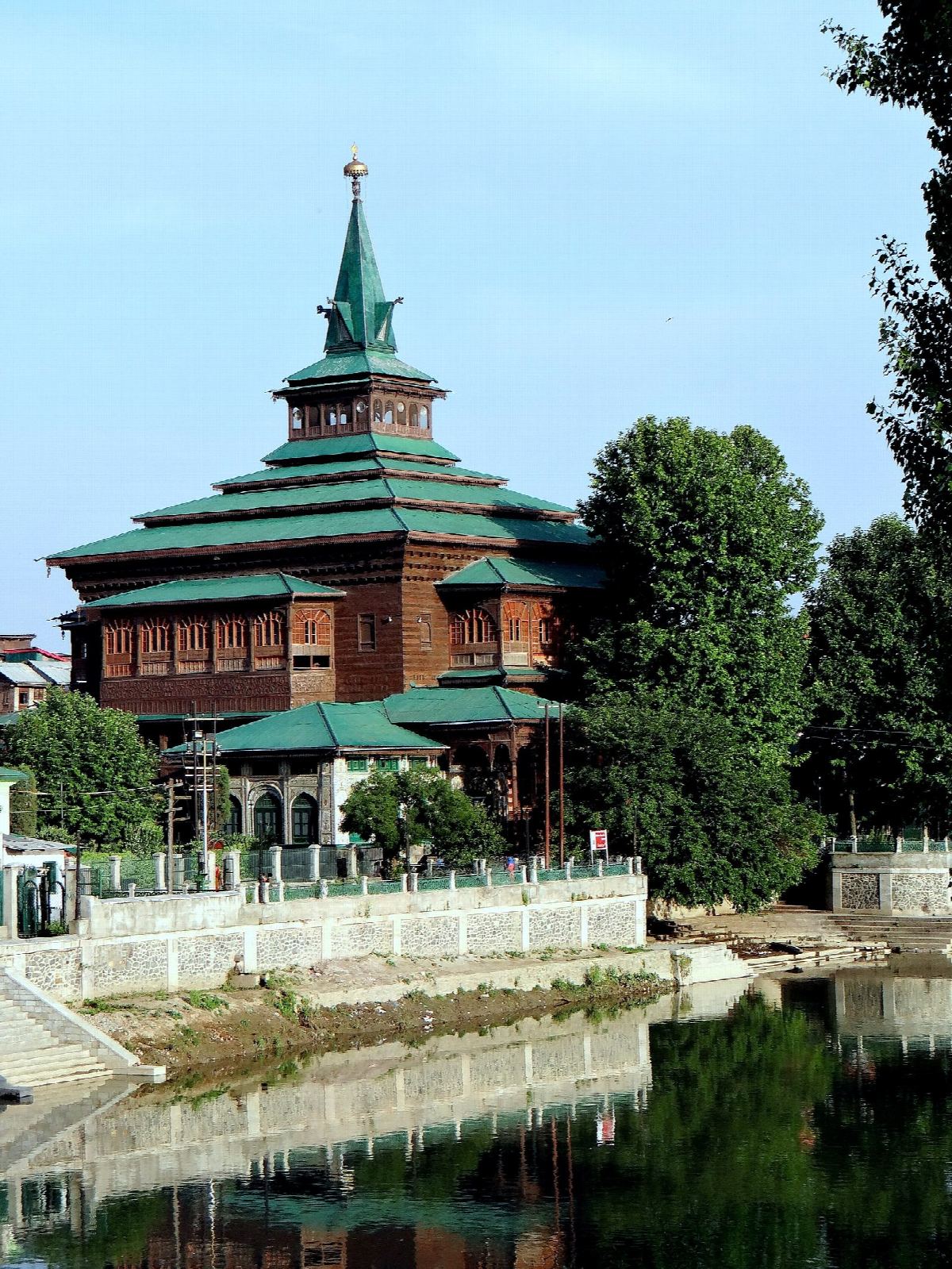
The Khanqah-e-Moula on the Jhelum, Srinagar, raised by Shah Mir's dynasty where Mir Sayyid Ali Hamadani preached. Photo: Tauqeerzahid, Wikimedia Commons, CC BY-SA 3.0.
A new calendar
He introduced the Kashmiri Era, replacing the old Laukika calendar. It counted from Rinchan's conversion in 1320 and stayed in use until the Mughal conquest in 1586, outliving his dynasty itself.
Power through local families
Rather than importing a foreign nobility, he empowered two indigenous Kashmiri families, the Magres and the Chaks, to check the feudal chiefs. The Chaks would, two centuries later, end his dynasty.
Foundation of a state
Three years and five months on the throne was enough to found something durable: a sultanate with its own institutions that his sons Jamshid and Ali Sher, and twenty-four reigns after them, inherited.
The sources
His story survives through Jonaraja's Rajatarangini, the Baharistan-i-Shahi, and the chronicles of Haidar Malik, court histories with their own loyalties, which modern historians read critically.
Who was Shah Mir?
Shah Mir (c. 1300–1342) was the founder of the Kashmir Sultanate and of the Shah Mir (Shahmiri) dynasty. He arrived in Kashmir in 1313, served under King Suhadeva, and crowned himself Sultan Shams-ud-Din on 4 July 1339.
Where did Shah Mir come from?
Most historians accept he came from Swat, in present-day Khyber Pakhtunkhwa, Pakistan. Competing theories propose Khasa descent from the Panjgabbar valley, or Turkish, Afghan, or Persian ancestry. His court's official genealogy claimed descent from Arjuna of the Mahabharata.
How did Shah Mir become sultan?
After the deaths of Sultan Sadruddin (Rinchan) and King Udayanadeva, he outmaneuvered the regent queen Kota Rani. Her troops deserted to him at Andarkot in 1339, she surrendered, and he took the throne as Sultan Shams-ud-Din.
When did Shah Mir die and who succeeded him?
He died on 6 July 1342 at Inderkot Sumbal, after ruling three years and five months, and is buried at Andarkot near Sumbal. His elder son Jamshid succeeded him, followed within two years by his younger son Ali Sher as Sultan Ala-ud-Din.
Primary reference for the dates and events summarized on this page.
Shah Mir dynasty, Wikipedia ↗The full dynasty: 26 reigns across 222 years of the Kashmir Sultanate.
Baharistan-i-Shahi ↗The Persian chronicle of medieval Kashmir, written around 1614, covering the Shahmiri and Chak sultans. English translation by K. N. Pandit (Gulshan Books, 2013).
Rajatarangini ↗Kashmir's Sanskrit chronicle of kings. Later writers such as Jonaraja and Srivara continued it into the sultanate period.
What happened after 1342? Two centuries of sultans, expansion, zealotry, and a golden age.
Explore the Shahmiri dynasty